The best guest book alternatives for every wedding style
SnapPix TeamPublished 23 Aug 202632 min read
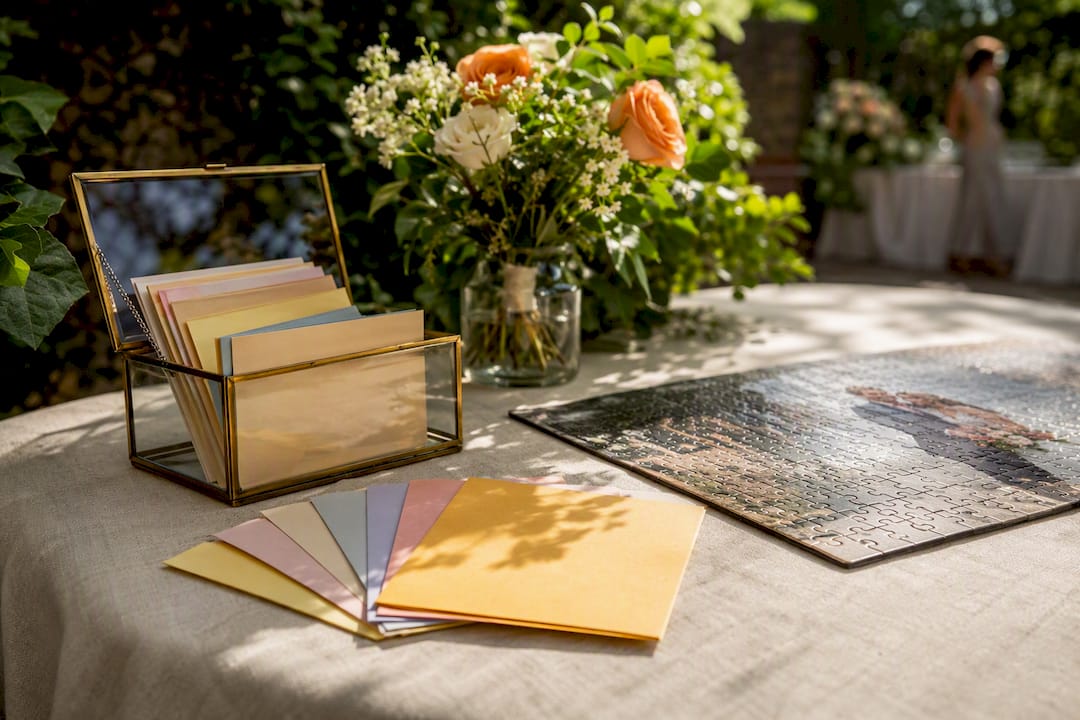
The best guest book alternatives right now are polaroid photo stations, digital QR photo galleries, fingerprint tree art, keepsake message jars, and audio or video message booths. Each one suits a different kind of wedding, so the trick isn’t finding the “best” option. It’s matching the format to your guest count, venue, and how much curation you’re willing to do afterwards.
Here’s how they break down:
The rest of this guide walks through how each format works, what it costs, and how to set it up so guests actually use it.
The most effective guest book alternative matches your guest count and venue formality first, and your aesthetic preferences second.
| Point | Details |
|---|---|
| Match format to formality | Casual weddings suit Jenga or polaroids; formal weddings suit framed art or signed maps. |
| Prompts drive participation | Specific, short signage consistently outperforms generic “sign here” instructions. |
| Plan curation time | Video and audio booths need someone to edit footage; budget hours, not minutes, for this. |
| Preserve fragile keepsakes early | Frame prints behind UV glass and store textiles in acid-free boxes within weeks of the wedding. |
| Digital galleries catch the rest | SnapPix’s no-app QR uploads have collected thousands of guest photos by removing download friction. |
Photo formats give you a physical or digital keepsake without asking guests to compose a sentence under pressure, which is why they’ve become one of the most requested alternatives on wedding planning sites. Instant-print stations remain one of the most enduring choices precisely because guests already know how to use a camera. No instructions needed.
Here are the main formats couples choose from:
For staffing, a self-serve polaroid table needs almost no attention beyond restocking film, but a print booth benefits from one attendant for the first half-hour to show people how it works. QR galleries need no staff at all once the QR code sign is placed somewhere guests will actually see it, ideally on every table rather than just near the entrance.
Signage matters more than most couples expect. A card that simply says “Guest Book” gets ignored. One that says “Snap it, we’ll treasure it” or “Scan here, upload your favourite shot of the night” gets used.
Pro Tip: Run a themed photo challenge alongside your upload station, something like “find the worst dance move” or “capture the cake before it’s cut”. Structured challenges consistently pull in far more candid shots than a plain “upload your photos” sign ever will.
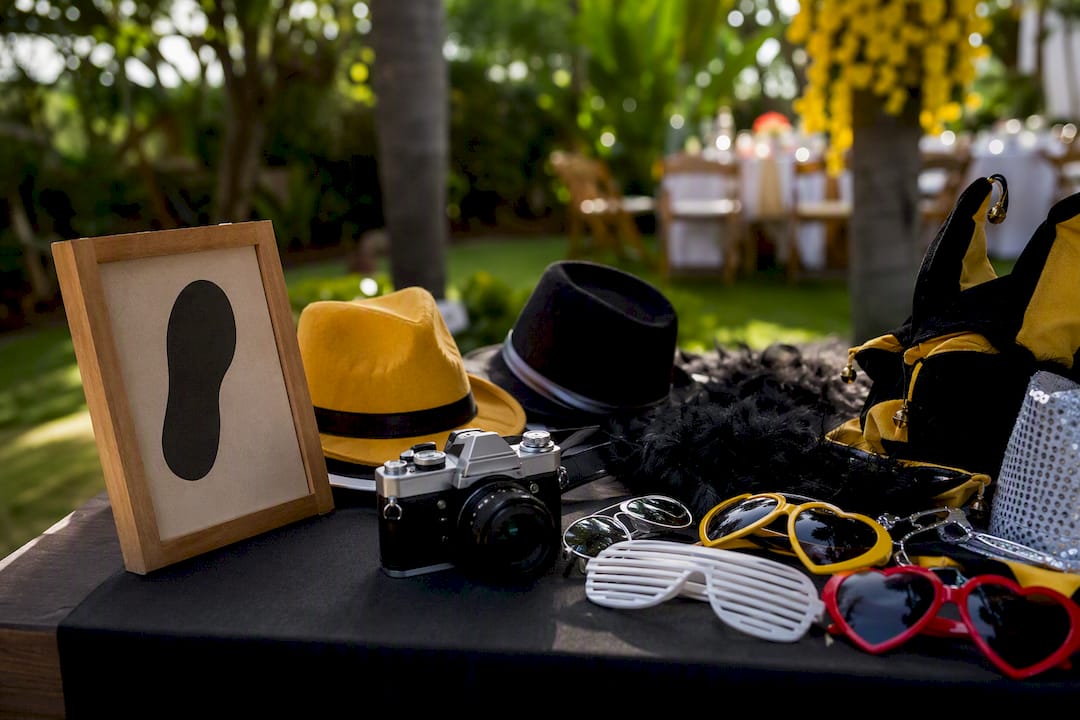
If you want something to hang rather than something to flip through, prints and art-style guest books turn signatures into decor. Grouping ideas by format helps here because the right choice depends entirely on how many guests you’re inviting and how much wall space you have.
The main options:
Use archival ink pads and pens rather than standard biros. Regular ink smudges on glossy card stock, and ballpoint pens skip on textured paper, both of which ruin a piece you’re planning to frame. Preservation guidance from wedding planning sites generally recommends framing behind UV-protective glass within a few weeks of the wedding, before ink has a chance to fade under direct light.
For sizing, a moderately sized print comfortably fits a large number of short signatures with room to breathe. Anything larger and you risk an empty, sparse-looking poster if your guest list runs smaller than expected.
Game-based formats turn the guest book into something you’ll actually use again, not just display. A LEGO guest book is a good example: guests write a message on a brick and add it to a shared build, giving you a genuinely interactive keepsake rather than a static page.
Popular options include:
Setup is straightforward: a small table, a pen tied to it (so it doesn’t wander off), and one clear sign explaining what to do. An attendant isn’t essential, but having someone check the table every hour to restock pens keeps things moving during a busy reception.
Spoken messages capture tone and emotion that handwriting can’t, but they come with more moving parts than a photo table. A vintage rotary phone prop connected to a simple recording app is the low-effort route: guests pick up, leave a message, hang up. No backdrop, no lighting rig, just a phone and a sign.
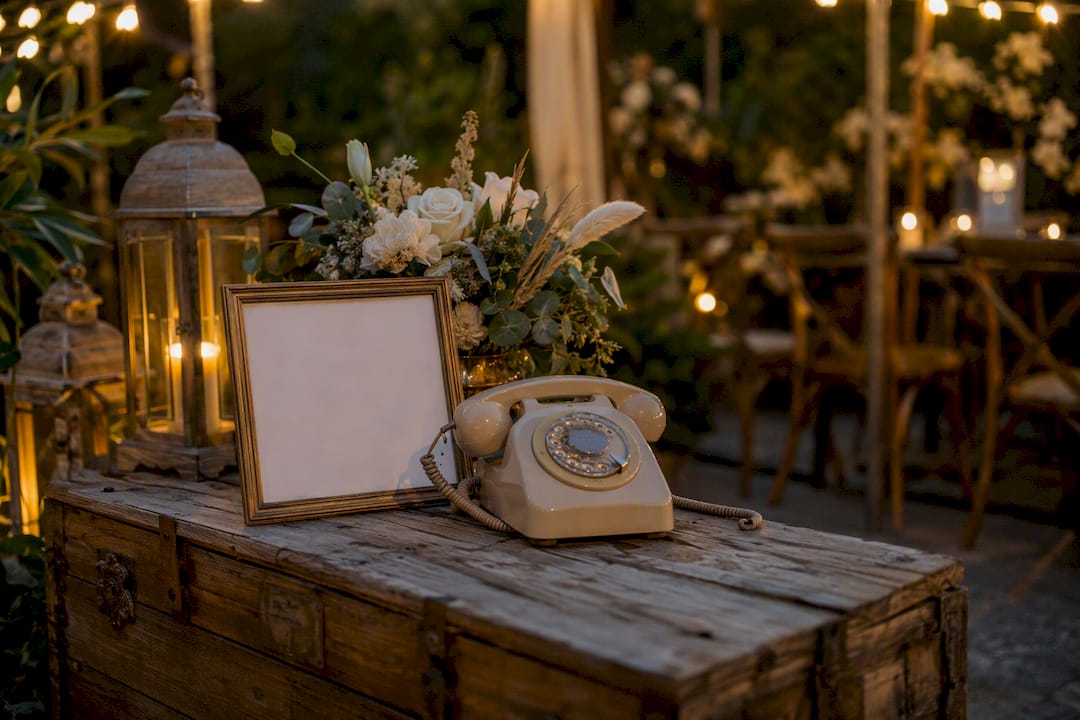
Video booths ask for more: a camera or tablet, a backdrop, decent lighting, and somewhere private enough that guests aren’t self-conscious. That privacy question matters. Consider whether messages will be shared publicly or just with the couple, and say so on the signage, since some guests will speak more freely knowing a recording stays private.
The other consideration is editing. Fifty guests leaving 90-second messages adds up to well over an hour of raw footage, and someone has to sit through it, trim the best bits, and compile them. If you don’t want that job after the wedding, stick to audio-only formats you can leave mostly unedited, or ask a friend in advance if they’ll take on the curation.
Pro Tip: Set a strict 30 to 60 second limit and put it on the sign. Guests left with no time limit tend to freeze up, while a short window nudges them to just say something warm and move on.
Tactile, heirloom-style formats suit couples who want something they’ll physically hold in ten years, not just glance at on a shelf. These work particularly well for family-focused weddings where older relatives are more comfortable writing a note or a recipe than posing for a camera.
Common formats include:
Pre-printed prompts help enormously here. A blank card invites “Congratulations!” written fifty times over; a card that asks “what’s one thing you wish someone had told you before your wedding day?” gets genuinely useful answers.
Fabric and textile keepsakes need proper storage away from direct sunlight and damp, ideally in an acid-free box if you’re not having the quilt finished immediately. Paper recipe cards last longest in a sealed box with silica packets to control humidity.
Start with three questions: how many guests are coming, how formal is the day, and who’s curating the result afterwards? A 200-guest formal wedding needs a format that scales, like a QR gallery or a large fingerprint poster. An intimate 40-guest wedding can afford something slower, like individually signed puzzle pieces.
Couples consistently underestimate how much participation depends on the prompt itself rather than the format. Simple, direct prompts paired with a visible attendant raise engagement across nearly every station type, from photo booths to message jars, because guests need permission and clarity more than they need a beautifully designed sign.
Most physical formats share the same weakness: you only capture what happens near the station. A QR-based digital gallery captures what happens everywhere else, the candid shots taken from guests’ own phones throughout the night. SnapPix works without requiring guests to download anything, which removes the single biggest friction point that stops people from bothering with disposable cameras or app-based alternatives.
What it offers couples specifically:
Real events using this approach have collected over 4,200 guest photos through a single QR code, evidence that removing the app-download barrier genuinely changes how much guests actually share.
A digital gallery works best alongside a physical keepsake rather than instead of one. Use a fingerprint poster or message jar for the tactile, framable piece, and let a QR gallery quietly catch everything else your camera-shy uncle never thought to hand over.
The format you choose should reflect the wedding itself, not just what looked good on a mood board. Rustic and barn weddings lean naturally towards Jenga blocks, mason jar notes, and rope-and-clothespin photo displays, since the materials already match the aesthetic. Beach and destination weddings favour signed maps or shell-based guest books, both of which tie the keepsake to the location itself.
Formal and black-tie weddings tend to suit framed art pieces over anything that looks like a party game, so a fingerprint tree or a signed matboard around a formal portrait fits the tone better than a jar of scribbled notes. Cultural and religious ceremonies sometimes call for specific adaptations. Some Jewish weddings incorporate a signed ketubah as the central art piece rather than a separate guest book, while multi-generational family weddings often benefit from recipe cards or advice notes, since older relatives frequently find a structured prompt easier to engage with than an open blank page.
Multicultural weddings blending two traditions often work well with a dual-format approach: a formal signed piece honouring one family’s traditions, alongside a more casual station like a QR photo gallery that works regardless of language or cultural background, since guests only need a phone camera to take part. The format should feel like an extension of the day, not a generic add-on borrowed from an unrelated wedding.
Most wedding guides treat guest book alternatives as a single choice: pick the prettiest idea from a Pinterest board and commit. That framing ignores the actual failure mode couples report afterwards, which isn’t picking the wrong format, it’s picking a format nobody used. A gorgeous fingerprint tree with twelve fingerprints on it is a worse outcome than a plain jar stuffed with eighty notes.
The overlooked variable is friction, not aesthetics. Every format on this list works when guests understand what to do within about three seconds of looking at it. That’s why signage wording deserves as much planning time as the format itself, and why digital options that remove app downloads tend to outperform anything requiring guests to queue, borrow a pen, or figure out a game’s rules mid-reception.
If you take one thing from this guide, let it be this: choose based on how little effort your specific guest list will tolerate, then layer in the sentimental format you actually want to keep. A QR gallery catching the whole night’s candid chaos, paired with one small physical keepsake for the mantelpiece, beats a single beautiful format that half your guests walked straight past.
SnapPix gives you the one guest book alternative that captures the entire wedding, not just what happens at a single station. While a polaroid table or fingerprint poster only records the guests who walk past it, a QR code on every table means anyone’s phone becomes part of your gallery, with no app download standing between a guest and sharing their photo.
That matters most for couples juggling a big guest list or a multi-part venue, where a single physical station simply can’t be everywhere at once. SnapPix’s core features include AI-driven smart albums that sort hundreds of candid shots automatically, photo challenges that nudge guests toward specific moments, and a three-month upload window so photos from guests who forget to share on the night still arrive later. Galleries stay password-protected, and you can check the deletion policy for exactly how long your photos remain accessible.
If you’re planning a wedding this year, set up your gallery before the big day so your QR code is printed and ready for table cards, signage, and your welcome sign at the door.
What is the most popular guest book alternative right now? Polaroid and instant-print photo stations remain among the most requested formats, largely because guests instinctively know how to use them without instructions. Digital QR galleries are gaining ground quickly for weddings with larger or more spread-out guest lists.
How much do guest book alternatives typically cost? Costs vary widely by format. A simple message jar or Jenga set can cost very little beyond the props themselves, while instant-print film and camera hire add up per guest. A QR-based digital gallery typically has no per-photo running cost once set up.
Can I use more than one guest book alternative at my wedding? Yes, and many couples do. A common pairing is a small physical keepsake, like a fingerprint poster or advice cards, alongside a QR photo gallery that catches candid shots throughout the night without needing a dedicated station.
How do I stop guests ignoring the guest book station? Specific, short signage makes the biggest difference. Instead of “Sign here”, try a direct instruction like “Scan the code, upload your favourite shot” or “Leave us a note about tonight.” Adding one attendant for the first half hour also helps guests understand what to do.
What’s the best guest book alternative for a small, intimate wedding? Puzzle pieces, message jars, or a signed map work particularly well for smaller guest lists, since each guest’s contribution stands out rather than getting lost among hundreds of signatures.
How long should I keep a digital guest book gallery open after the wedding? Many digital galleries, including SnapPix, keep uploads open for around three months after the event, giving guests who forget to share photos on the night time to add them later.

Secure sponsor access to event photos with a host controlled workflow. Use time limited QR links, view only tokens, instant revocation, and access logs.

A practical host first workflow: collect no app QR uploads, keep moderation and professional curation, set retention and backup plans so you stay in control.

Event hosts' practical guide to posed and candid photos: perception research, hands on shooting tips, and no app guest uploads to boost candid coverage.