4,200 Photos: No App Shared Galleries Work for Family Reunion Hosts
SnapPix TeamPublished 9 Oct 202621 min read

The simplest way to gather every family reunion photo is to use one shared upload link or QR code that lets guests upload in their browser. Once it’s set up, anyone from a tech-savvy teenager to a grandparent with a basic smartphone can add their pictures without downloading anything. This guide walks you through setting it up, getting everyone to actually use it, and turning the results into something you’ll treasure.
TL;DR:
- About 91% of U.S. adults own smartphones, but older adults are less likely to; offer a nearby helper or kiosk as a backup.
- Test the link and QR code on at least two phones and browsers, including a phone using mobile data, before printing signs.
- To prompt uploads, announce the challenge twice, place codes where guests pause, and name specific shots or offer a small prize.
- For photos of children under 13, obtain verifiable parental consent before collecting personal information, avoid child accounts, and secure the gallery with a password.
- Set a firm upload deadline one or two weeks after the reunion, then download the gallery and keep one local and one cloud backup.
A shared upload link or QR code is our top recommendation because it works in any browser, on any device, with no account required. Guests tap a code or click a link, their camera roll opens, and photos upload straight into one place.
Other methods work too, but each comes with trade-offs:
Accessibility matters here. Around 91% of US adults own a smartphone, according to Pew Research, which makes browser-based uploads a sensible default for most of your guest list. Smartphone ownership drops among older adults, so build in a backup plan, whether that’s a helper stationed nearby or a kiosk, for guests who need it.
Setting up a reliable gallery takes less time than most people expect. Work through this checklist before the big day:
Testing matters more than people assume. A link that works on your phone might behave oddly on an older browser, so run it through its paces with a couple of different devices before you commit to printing signs.
Pro Tip: Test your QR code from a phone that is not connected to your home WiFi, since that’s closer to how most guests will actually load it on the day.
Having a gallery is only half the job. Getting people to use it takes a little nudging.
Small incentives help too. A simple “most creative photo wins a prize” works better than vague encouragement to “take lots of pictures.”
Pro Tip: Announce the photo challenge twice, once at the start and once midway through, since half your guests will have missed the first mention.
A big batch of unsorted photos is overwhelming to look through later, so a little structure early on pays off.
Collaborative archiving tends to produce a fuller picture of an event than relying on one person’s camera roll. Research into personal archiving points to structured, shared tools as a better way to preserve multiple perspectives rather than letting photos drift into individual phones where they’re never seen again.
If your gallery includes photos of children under 13, a little care goes a long way. The Children’s Online Privacy Protection Rule requires verifiable parental consent before collecting personal information from under-13s, so avoid asking children to create accounts or submit personal details directly.
In practice, that means password-protecting your gallery, telling guests upfront how photos will be used, and giving anyone the option to opt out or ask for a photo to be removed. If something sensitive slips through, take it down promptly rather than leaving it live.

The photos don’t stop coming in the moment the event ends, so plan for a short tail of late uploads.
A clear deadline does more than a vague “upload whenever.” People respond to a date.
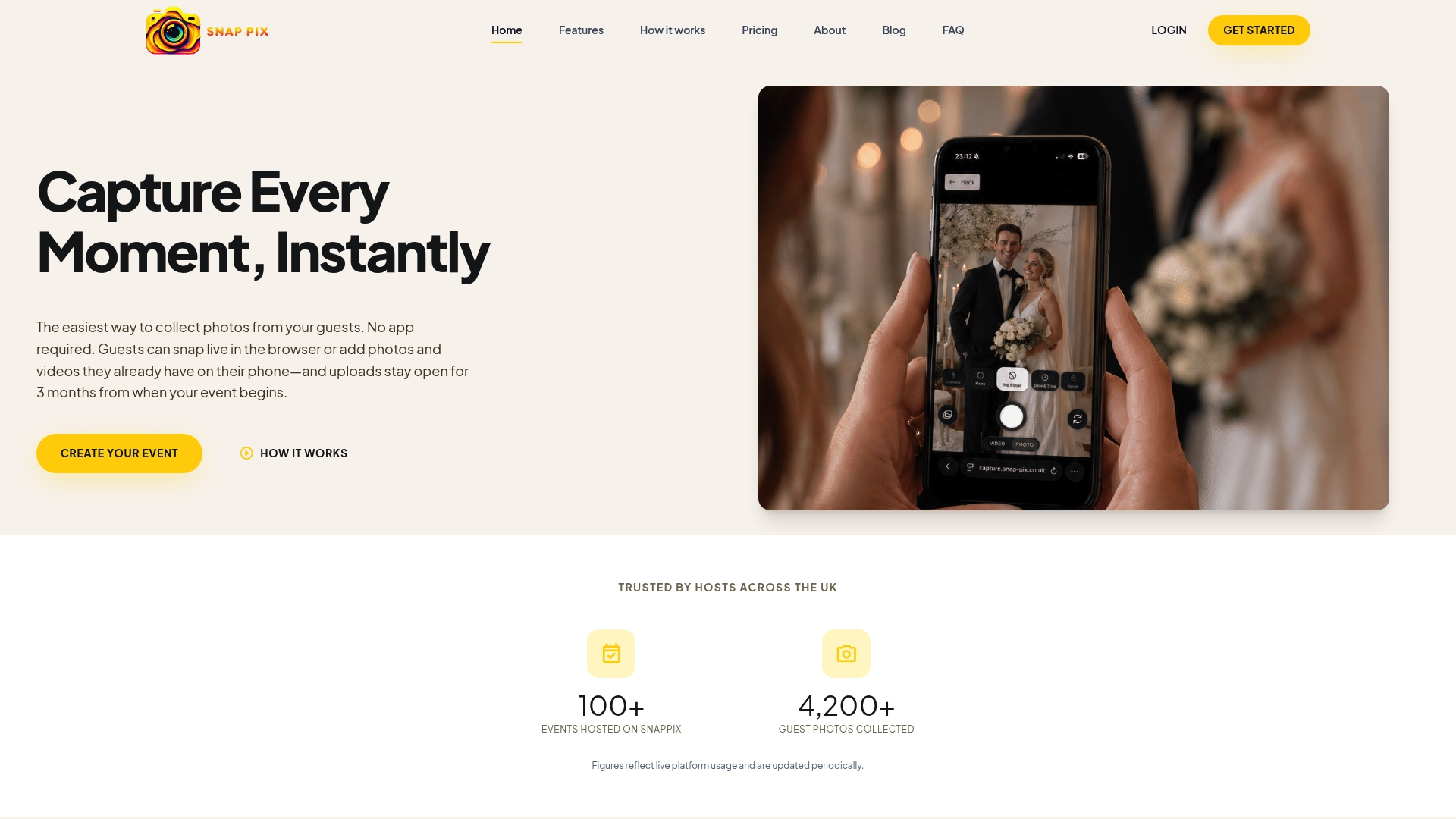
We built SnapPix around the exact problems this guide covers: guests scan a QR code, upload straight from their browser, and never need to install anything or create an account. Our platform has already collected over 4,200 guest photos across events, which speaks to how naturally people take to it once the barrier of an app download is removed.
AI-driven smart albums sort contributions automatically, photo challenges keep engagement up throughout the day, and galleries stay live for three months after the event, giving latecomers plenty of time to add their shots. For hosts weighing up a no-app gallery, the checklist is simple: no installs, automatic sorting, a clear retention window, and a way to keep guests engaged beyond a single announcement.
Most reunion planning advice focuses on logistics: catering, seating, who’s bringing the folding tables. Photo collection gets an afterthought, usually a passing mention of “everyone post to the group chat,” which almost never works because photos scatter across platforms nobody checks twice.

The bigger mistake is treating photo collection as something that happens automatically once people start snapping away. It doesn’t. Without one dedicated, low-friction place to send photos, you end up with fragments: a cousin’s camera roll here, a WhatsApp thread there, and half the day’s best moments never surfacing at all.
What the evidence actually supports is accessibility over cleverness. A no-app, QR-based link beats a fancier app every time, simply because it removes the one barrier that stops older or less confident relatives from joining in. Prioritise that first. Worry about photobooks and highlight reels later, once you’ve actually captured the full spread of moments from every generation at the table.
— Liam
We offer a platform so hosts can set up a shared gallery quickly: a QR code guests scan in their browser, no app required, with AI smart albums sorting photos automatically and photo challenges keeping engagement high throughout the event. Galleries can be secured and password-protected, with limited hosting periods included.
Set up your gallery today, test it on a couple of devices, and you’ll walk into reunion day knowing every photo has somewhere to land.
No. A browser-based QR code or link lets guests upload directly from their phone’s camera roll without installing anything, which keeps the process accessible for every generation at your reunion.
Most organisers keep uploads open for a few weeks after the event to catch latecomers, then archive the gallery. Galleries can stay live for several months after the event, giving guests time to add photos they forgot to upload on the day.
Pair a visible QR code with a quick, friendly explanation from a helper rather than relying on guests to figure it out alone. Research on multi-generational sharing tools suggests keeping the technical setup separate from the actual interface guests use, which is exactly what a simple scan-and-upload flow achieves.
Yes. The Children’s Online Privacy Protection Rule requires verifiable parental consent before collecting personal information from children under 13, so avoid requiring accounts from children and keep the gallery password-protected.
Download the full gallery, keep at least two backup copies, and consider turning the best shots into a photobook or slideshow. Setting a clear deadline for late uploads, then archiving or extending hosting, keeps the process tidy rather than open-ended.

Secure sponsor access to event photos with a host controlled workflow. Use time limited QR links, view only tokens, instant revocation, and access logs.

A practical host first workflow: collect no app QR uploads, keep moderation and professional curation, set retention and backup plans so you stay in control.

Event hosts' practical guide to posed and candid photos: perception research, hands on shooting tips, and no app guest uploads to boost candid coverage.