Event Hosts: Manage RSVPs Online With 5–7 Fields and One Reminder
SnapPix TeamPublished 26 Sept 202629 min read

The quickest way to manage RSVPs online is a hosted RSVP page or a short form linked from a QR code, kept to 5–7 fields and tested on mobile before you send a single invite. Set a deadline three to four weeks before your event, build in a one to two week buffer for final catering counts, and automate one reminder so you’re not chasing replies by hand. That’s the whole system. Everything else in this guide is detail.
TL;DR:
- Setting a RSVP deadline three to four weeks before the event with a one to two week buffer ensures accurate headcounts for catering and logistics.
- Automating at least one reminder a week before the deadline increases response rates and reduces manual follow-ups.
- Limiting RSVP forms to five to seven mobile-optimized fields improves completion rates and guest experience.
- Using a simple form tool like Google Forms or a hosted RSVP page suits small private events, while ticketed or public events benefit from hosted event pages.
- For events with multiple components or guests with different preferences, use separate, clear sections or short forms instead of complex, one-size-fits-all forms.
Not every event needs the same setup, and picking the wrong one is why so many hosts end up drowning in group chats and half-answered texts. The right tool depends on your guest list, your venue, and how much friction your guests will tolerate.
Here’s how the main approaches stack up:
The pattern worth noticing: digital RSVPs remain the most popular and effective method across almost every event type, but the best hosts don’t force one channel on everyone. They pick the primary tool for the majority and keep a low-effort fallback open for the rest.
Building your RSVP system properly the first time saves you weeks of chasing people later. Follow this sequence and you’ll have something live within an hour.
Pro Tip: Test your form on a phone with one hand, the way most guests will actually fill it in on their commute or between errands. If it takes more than 30 seconds to complete, cut a field.
Get the field list right for your specific event and you’re most of the way there. Our guide to RSVP questions worth asking breaks down which fields genuinely earn their place on the form.
Timing is where most RSVP systems quietly fail. Hosts either set deadlines too close to the event, or set them and then never follow up until it’s too late to fix a headcount problem.
The reliable rule for formal events: set your RSVP deadline three to four weeks before the event, then leave a one to two week buffer between that deadline and the date you need to hand a final number to your caterer or venue. That buffer is not optional padding, it’s where you’ll do your actual chasing.

Expect to need it. Roughly 20 to 30% of guests won’t respond by your first deadline, no matter how clear your invite was. A single automated reminder sent about a week before the deadline catches most of that group without you lifting a finger, and a second, more personal nudge after the deadline usually brings in the stragglers.
A few things worth building into your reminder plan:
If you want more copy to work from, our RSVP wording examples collection has templates for both the first invite and the follow-up nudge.
Once replies start coming in, the job shifts from collecting data to using it. A good export should include name, response (yes/no), plus-one details, meal or dietary selection, accessibility needs, and a contact method, in that order, so it reads cleanly whether you hand it to a caterer or load it into a spreadsheet.

CSV exports into Google Sheets are still the simplest way to build seating charts and pass numbers to a venue. Most RSVP tools generate this automatically, and a live dashboard view lets you glance at your current headcount without opening a spreadsheet every time someone replies.
A few practical habits keep the data usable right up to the event:
Our guide to planning and tracking a guest list covers the seating-chart side of this in more depth.
A form that’s hard to fill in doesn’t just annoy guests, it directly costs you replies. Limiting the form to 5–7 fields and building it in a single-column, mobile-first layout is the difference between a guest finishing it on the spot and one who closes the tab meaning to come back later, and never does.
Label every field in plain language: “Will you be joining us?” beats “Attendance Status.” Make Yes/No buttons large enough to tap accurately on a small screen, and avoid dropdown menus with more than a handful of options.
Not every guest wants to use a digital form, and that’s fine. Offer a phone number or postal address as an alternative and say so clearly on the invite: “Prefer to call or write? Here’s how.” State briefly what you’ll do with any personal data collected, name and contact details for planning purposes only, and nothing else. That single line builds trust with guests who are naturally cautious about handing over information online.
Pro Tip: Before sending your invite, fill out the form yourself on your phone, in a hurry, the way a distracted guest would. If you hesitate on any question, simplify it.
Complex events, a wedding weekend with a rehearsal dinner, a ceremony, and a next-day brunch, tempt hosts into building one giant form with conditional logic branching every which way. Resist that instinct where you can.
For multiple linked events, either use clearly separated sections within one form or, if the logic gets complicated, build two short forms instead of one long one. Guests respond faster to a form that feels quick, even if that means two clicks instead of one.
Plus-ones need explicit rules stated on the invite itself, not left for the guest to guess. If a plus-one is allowed, capture that person’s name in the same submission rather than chasing it separately later. Dietary and accessibility needs can usually share a single open text field marked optional, “Any dietary or accessibility needs we should know about?”, rather than forcing guests through a checklist of allergens they don’t have.
Grouping replies into household or table blocks as they come in makes seating decisions far easier down the line. When in doubt, ask less. A guest who’s mildly annoyed by one extra question is more likely to abandon the form than one who’s simply asked to reply yes or no.
We built SnapPix around a simple observation: guests who are already responding to your invite are often the same guests who’ll be taking the best candid photos on the day. So we combined the two.
Guests scan a QR code, submit their RSVP, and later upload photos and videos, all through a browser, with no app download standing between them and either action. That single-flow approach is why the platform has already helped hosts collect over 4,200 guest photos across weddings, birthdays, and corporate events.
A few things that make it work in practice:
If you’re weighing up RSVP options generally, our roundup of RSVP websites built around guest photos covers how different platforms handle the crossover between responses and memory-keeping.
Most hosts overthink the tool choice and underthink the deadline. Pick the simplest option that fits your guest list, publish it today, and move on, the platform matters far less than whether you actually set a firm date and follow up.
This week: publish your RSVP page, build a 5–7 field mobile-friendly form, and set a deadline with a real buffer before you owe anyone a final number. Generate a short link and QR code, schedule exactly one automated reminder, and stop there. Export your guestlist as a CSV once responses settle, and decide your check-in method before the week of the event, not the morning of.
The hosts who feel calm on event day aren’t the ones with the fanciest form. They’re the ones who set a deadline and actually enforced it.
— Liam
SnapPix is the simpler alternative to running a separate RSVP tool and a separate photo-sharing app for the same event. One QR code covers both jobs, guests reply and later upload their photos through the same no-app browser flow, so you’re not juggling two links, two logins, and two sets of instructions on the invite.
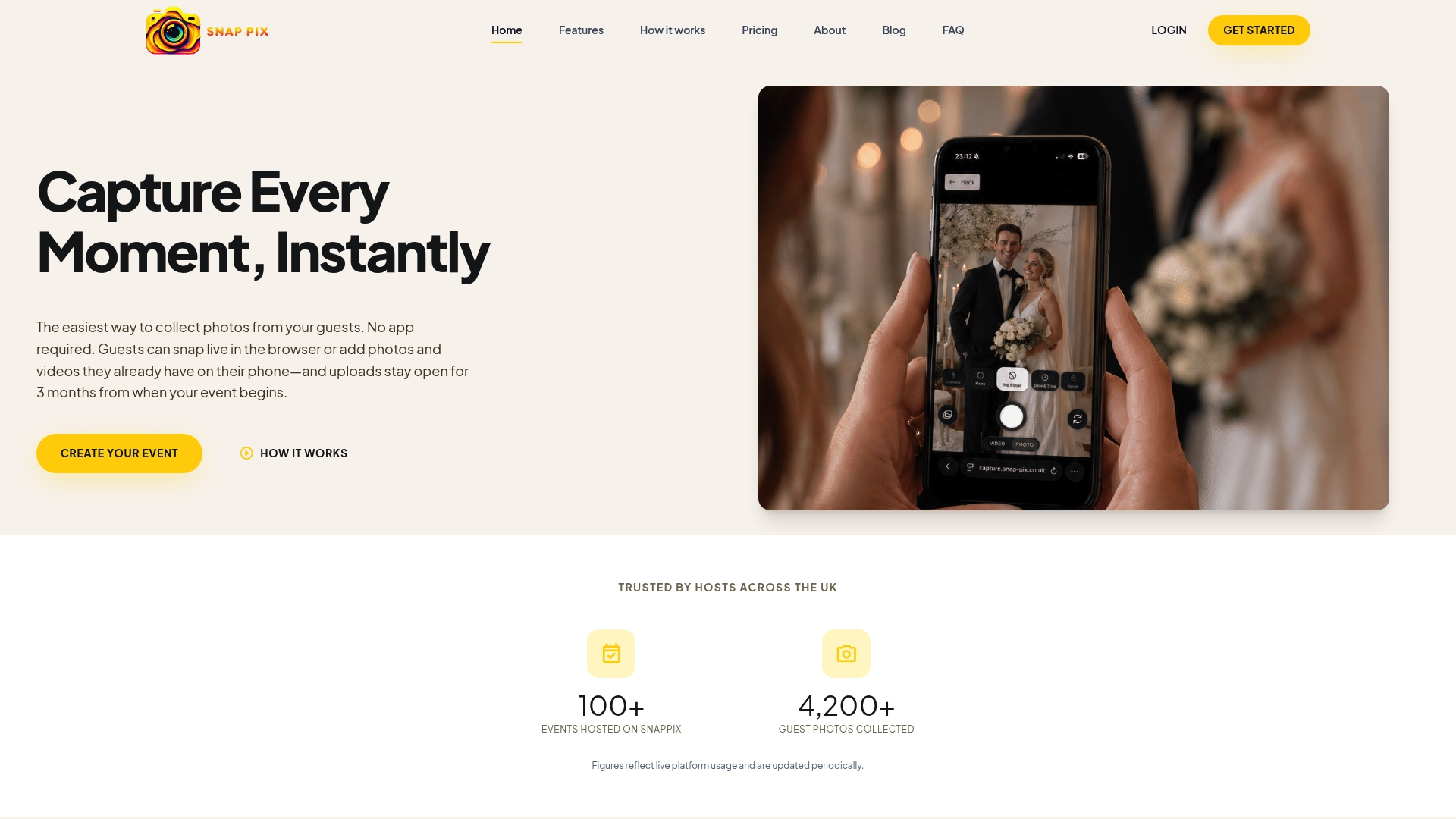
It’s the right fit whenever photos matter to you as much as headcounts do, weddings, milestone birthdays, graduations, anywhere you’d hate to lose the candid shots your guests take on their own phones. Set-up follows the same pattern covered above: publish your RSVP page, add the QR code to your invite, and schedule a reminder. The Full Event Access plan is £14.99 as a one-off per event, covering unlimited guests and the full feature set, including the guest book, smart albums and photo challenges. A free tier is also available to test the flow first. Head to the pricing page to activate your event and get your QR code live before your next invite goes out.
Response-rate figures and deadline recommendations in this guide draw on RSVP response rate benchmarks, wedding RSVP deadline etiquette, and RSVP form best practice guidance. Catering lead times mentioned alongside deadlines are informed by broader event catering planning resources.
There isn’t one single “best” platform, it depends on whether you need ticketing, simple form replies, or combined photo and RSVP collection. For events where guest photos matter as much as headcounts, SnapPix combines both in one QR-based flow with no app required.
There’s no single official “80% rule,” but it reflects a common pattern seen across large samples of events: 78.9% of all responses are ‘yes’ overall, with weddings averaging 80.9% ‘yes’ among replies. Treat it as a rough planning benchmark rather than a guarantee for your specific guest list.
Yes, Google Forms is free to use for building an RSVP form, and it now includes a native response limit and close-date feature so you can cap submissions without any paid add-ons. It won’t handle photo collection or guest books, so hosts who want those extras typically pair it with, or switch to, a dedicated event platform.
Google Forms remains the most widely used free option for simple yes/no RSVP collection with basic fields. If you also want a shareable QR code, guest photo uploads, and a digital guest book without any cost to test it, SnapPix’s free tier covers that combined workflow before you decide whether to activate full event access.
Keep it to around 5 to 7 fields, typically name, attendance, guest count, and one combined dietary or accessibility question. Fewer fields consistently produce higher completion rates, especially on mobile.

Secure sponsor access to event photos with a host controlled workflow. Use time limited QR links, view only tokens, instant revocation, and access logs.

A practical host first workflow: collect no app QR uploads, keep moderation and professional curation, set retention and backup plans so you stay in control.

Event hosts' practical guide to posed and candid photos: perception research, hands on shooting tips, and no app guest uploads to boost candid coverage.